
Winter in the USA brings holiday cheer, but the cold air can be a silent enemy to your skin. To keep your skin soft and hydrated, finding the right body lotion for winter USA market offers is absolutely essential. Without a proper routine, the harsh weather strips away natural oils, leaving your skin dry and vulnerable.
If you have ever felt that uncomfortable tightness, seen visible flakes on your legs, or dealt with cracked knuckles in January, you know exactly what we are talking about. But here is the good news: with the right knowledge and the perfect body lotion, you can maintain a summer-like glow even in the depths of winter.
In this comprehensive guide, we will dive deep into why your skin suffers in winter, the science behind choosing the right lotion, and a dermatologist-approved routine to keep your skin hydrated, soft, and healthy.
Understanding the Winter Threat: How Cold Weather Affects Your Skin
Before we discuss solutions, it is crucial to understand the problem. Why does winter affect our skin so severely compared to other seasons?

The Science of “Winter Itch”
In medical terms, the condition of dry skin in winter is often referred to as Xerosis Cutis or “Winter Itch.” During the winter months in the USA—whether you are facing the wet cold of the Northeast or the dry chill of the Midwest—humidity levels drop significantly.
Your skin has a natural protective layer known as the Skin Barrier (or Stratum Corneum). This barrier holds moisture in and keeps irritants out. However, cold air combined with low humidity accelerates Transepidermal Water Loss (TEWL). This means water evaporates from your skin faster than your body can replenish it.
The Double Whammy: Outdoor Cold vs. Indoor Heat
It’s not just the outdoors that is the enemy. When you rush inside to escape the freezing wind, you likely crank up the heater. Central heating systems, space heaters, and fireplaces dry out the indoor air drastically. This constant shift from freezing cold outside to dry heat inside confuses your skin and depletes its moisture reserves, leading to:
- Redness and irritation.
- Flaking and scaling.
- Micro-cracks that can become painful.
Why Using Body Lotion for Winter USA is Non-Negotiable
Many people treat moisturizing as a luxury, but using a high-quality body lotion for winter is a medical necessity for maintaining healthy skin barrier.
Body lotion acts as a substitute for the natural oils your skin has stopped producing. It performs three critical functions:
- Replenishes Moisture: It adds water back into the skin layers.
- Seals the Barrier: It creates a protective seal on top of the skin to prevent further water loss.
- Soothes Irritation: It calms the nerve endings that cause itching and discomfort.
The Ultimate Guide to Choosing the Best Body Lotion for Winter USA
Walking down the skincare aisle can be overwhelming. To pick the best body lotion for winter, the secret lies in reading the ingredient label, not just the marketing claims.
For winter care, you need a lotion that combines Humectants, Emollients, and Occlusives.
-
Humectants (The Magnets)
Humectants draw moisture from the air and deeper layers of your skin to the surface.
- Glycerin: The gold standard for hydration. It is gentle and effective for all skin types.
- Hyaluronic Acid: A powerhouse that can hold up to 1,000 times its weight in water.
- Urea: Excellent for extremely rough skin as it also helps exfoliate dead cells.
-
Emollients (The Smoothers)
These ingredients fill in the cracks between skin cells, making your skin feel soft and smooth instantly.
- Shea Butter: Rich in vitamins and fatty acids, perfect for deep conditioning.
- Ceramides: These are lipids (fats) that mimic your skin’s natural barrier. Think of ceramides as the “cement” holding your skin cells (bricks) together.
- Cocoa Butter: Provides deep nourishment and improves elasticity.
-
Occlusives (The Seals)
In winter, you need an occlusive to lock everything in. Without this, the moisture pulled in by humectants will just evaporate.
- Petrolatum (Petroleum Jelly): The most effective occlusive.
- Dimethicone: A silicone that creates a breathable barrier.
- Mineral Oil: Gentle and effective for sealing moisture.
Thick Cream vs. Thin Body Lotion for Winter USA
The consistency of your moisturizer matters significantly in winter.
- Lotions: These have a higher water content. They absorb fast and are lightweight. While great for summer, they might be too thin for harsh winters unless they are formulated with strong occlusives.
- Creams: These have a 50/50 ratio of oil and water. They are thicker, heavier, and provide a better barrier against the cold.
- Ointments: These are mostly oil (like Vaseline). They are greasy but offer the ultimate protection for cracked heels or hands.
Verdict: When searching for the best body lotion for winter USA stores provide, switch from a light lotion to a rich cream or body butter.
Step-by-Step: How to Apply Body Lotion for Maximum Results
You might be buying the most expensive lotion, but if you are applying it wrong, you won’t see results. Here is the dermatologist-recommended method:
The “3-Minute Rule”
The most critical time to apply lotion is immediately after showering.
- Pat your skin dry with a towel (do not rub!). Leave your skin slightly damp.
- Apply your lotion within 3 minutes of stepping out of the shower.
- This traps the water droplets sitting on your skin inside your pores. If you wait until your skin is completely dry, you miss this window of opportunity.
The Application Technique
- Be Generous: Don’t be shy. Use a generous amount to cover your entire body.
- Warm It Up: Rub the lotion between your palms for a few seconds to warm it up. This helps it penetrate better.
- Massage Gently: Use circular motions. This not only helps absorption but also improves blood circulation, which can be sluggish in cold weather.
- Target Problem Areas: Spend extra time on elbows, knees, and heels.
Best Body Lotion for Winter USA for Different Skin Types
One size does not fit all. Your skin type dictates which ingredients will work best for you.
For Dry and Flaky Skin
If your skin looks like a desert landscape, you need heavy-duty hydration.
- Look for: Shea Butter, Petrolatum, and Ceramides.
- Avoid: High alcohol content or strong fragrances.
- Recommendation: Use a body butter or a “repairing” cream.
For Oily or Acne-Prone Body Skin
Yes, your body can be oily even in winter (especially the back and chest). You need hydration without clogging pores.
- Look for: “Non-comedogenic” on the label. Glycerin and Hyaluronic Acid are your friends.
- Texture: Gel-creams or lightweight lotions.
For Sensitive Skin & Eczema
Winter is a nightmare for eczema sufferers. The cold triggers flare-ups.
- Look for: Colloidal Oatmeal (soothes itching), Aloe Vera, and Fragrance-Free formulas.
- Avoid: Essential oils, dyes, and parabens.
- Tip: Look for the National Eczema Association seal on products.
For Aging Skin
Mature skin produces less oil naturally and is thinner.
- Look for: Retinol (to boost collagen), Alpha Hydroxy Acids (AHAs like Lactic Acid to gently exfoliate), and Vitamin E.
Lifestyle Changes to Boost Your Lotion’s Effectiveness
Lotion can only do so much if your lifestyle is working against it. Pair your skincare routine with these habits for the best defense.
-
Watch Your Water Temperature
We know a steaming hot shower feels amazing when it’s freezing outside. However, hot water strips away natural oils faster than anything else.
- Solution: Stick to lukewarm water. Keep showers short (5-10 minutes).
-
Hydrate from the Inside
Your skin reflects your internal hydration. In winter, we often forget to drink water because we don’t feel thirsty.
- Tip: Herbal teas and warm lemon water count towards your hydration goals.
-
Use a Humidifier
Combat the dry heat from your furnace by running a humidifier in your bedroom. This adds moisture back into the air, preventing your skin from drying out while you sleep.
-
Clothing Matters
Wool sweaters are warm, but they can be scratchy and irritating to dry skin.
- Tip: According to the American Academy of Dermatology, you should wear a soft cotton or silk layer underneath your wool clothing to prevent direct contact with your skin.
DIY Body Lotion for Winter USA: A Natural Alternative
If you prefer natural ingredients or want to save money, making your own lotion is surprisingly easy. However, remember that DIY lotions lack preservatives, so they have a shorter shelf life.
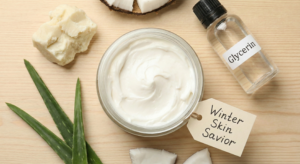
Nourishing Winter Whipped Body Butter Recipe:
- Ingredients:
- 1/2 cup Organic Coconut Oil (Antibacterial and moisturizing)
- 1/4 cup Raw Shea Butter (Deeply softening)
- 2 tablespoons Aloe Vera Gel (Soothing)
- 1 teaspoon Vitamin E Oil (Preservative and healing)
- Optional: 5-10 drops of Lavender Essential Oil for scent.
- Instructions:
-
- Melt the coconut oil and shea butter in a double boiler or microwave (short bursts).
- Let the mixture cool until it starts to solidify but is still soft.
- Add the Aloe Vera and oils.
- Whip with an electric hand mixer for 5-10 minutes until it looks like whipped cream.
- Store in a clean glass jar.
Common Winter Skin Problems & Solutions
Even with lotion, problems can arise. Here is how to troubleshoot:
| Problem | Cause | Quick Solution |
| Cracked Heels | Extreme dryness and pressure | Apply a thick ointment (like Vaseline) and wear cotton socks to bed. |
| Keratosis Pilaris | Blocked hair follicles (Chicken Skin) | Use a lotion containing Lactic Acid or Urea to exfoliate gently. |
| Winter Itch | Dryness and histamine release | Switch to an oatmeal-based lotion and take lukewarm showers. |
| Red, Raw Hands | Frequent washing and cold wind | Apply hand cream after every wash and wear gloves outside. |
Conclusion: Consistency is Key
Winter doesn’t have to mean hiding your skin under layers of clothes. Your best defense against the harsh US climate is a nourishing body lotion for winter USA experts recommend, applied regularly.
Remember the golden rules:
- Choose the right ingredients (Ceramides, Glycerin, Shea Butter).
- Apply immediately after showering on damp skin.
- Stay consistent—twice a day, every day.
By making body lotion a non-negotiable part of your daily routine, you will step into spring with skin that is soft, resilient, and glowing. Stay warm, stay hydrated, and give your skin the love it deserves this season!
Frequently Asked Questions About Body Lotion for Winter USA
-
What makes body lotion essential for winter in the USA?
Winter air in the US is distinctively dry and cold, which damages the skin barrier. A good lotion not only hydrates but also creates a protective seal to prevent moisture loss caused by indoor heating and outdoor wind.
-
How often should I apply body lotion in winter?
Ideally, you should apply it at least twice daily. The most important time is immediately after showering to lock in moisture. A second application before bed helps repair the skin overnight.
-
Can body lotion prevent winter skin irritation?
Yes, absolutely. Regular moisturizing maintains the skin barrier’s integrity, preventing allergens and irritants from penetrating the skin. This significantly reduces itching, redness, and the likelihood of eczema flare-ups.
-
What ingredients should I look for in winter lotions?
Focus on the “Holy Trinity” of moisturizing:
- Humectants: Glycerin, Hyaluronic Acid.
- Emollients: Shea Butter, Ceramides, Cocoa Butter.
- Occlusives: Petrolatum, Dimethicone (to seal it all in).
-
Why does my skin still feel dry even after applying lotion?
This could be due to a few reasons:
- You might be using a lotion that is too thin (water-based) instead of a thicker cream.
- You are applying it to completely dry skin instead of damp skin.
- You need to exfoliate. Dead skin cells can block lotion from absorbing. Try using a gentle body scrub once a week.
-
Is coconut oil good as a winter body lotion?
Coconut oil is a good sealant (occlusive), but it doesn’t add water to the skin. For best results in winter, use a water-based lotion first to hydrate, and then layer coconut oil on top to seal the moisture in.