
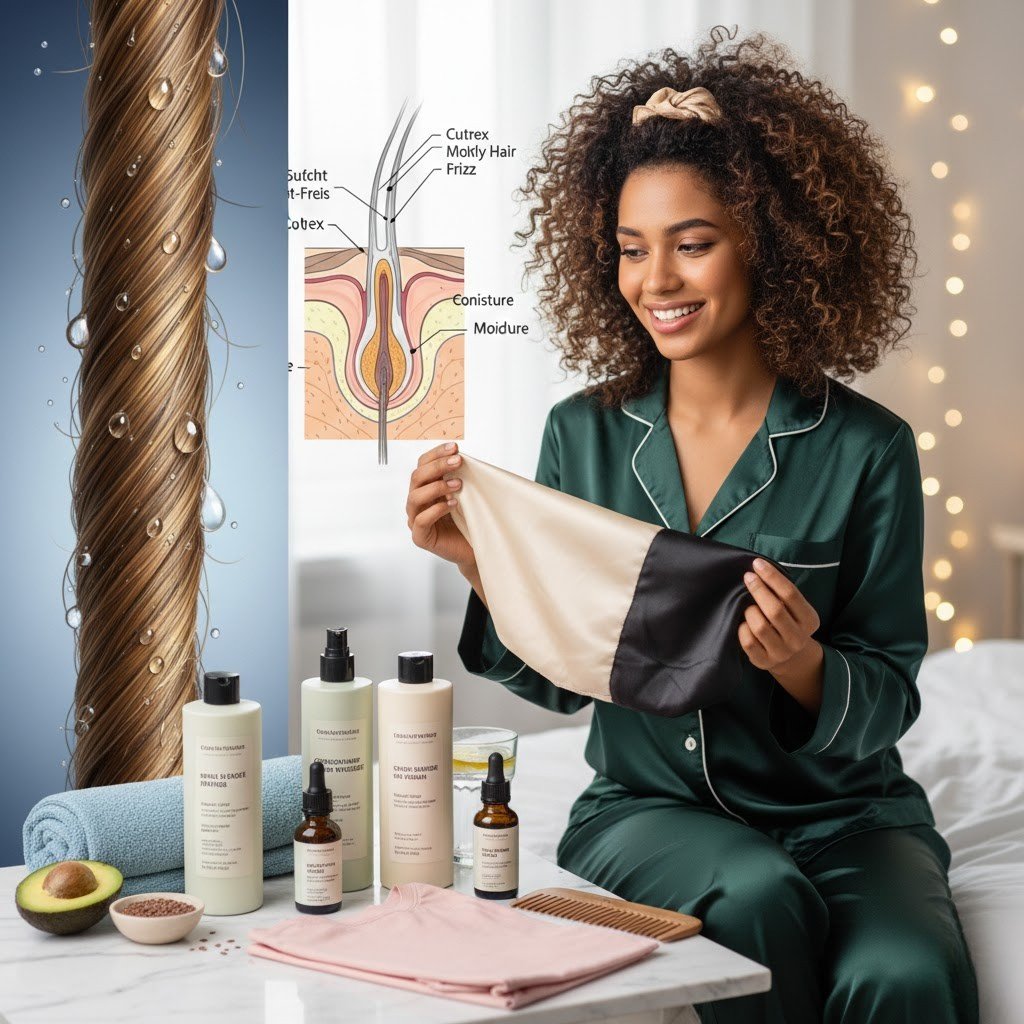
To effectively how to reduce frizz in curly hair, you must focus on three core pillars: deep hydration, friction reduction, and cuticle sealing. Start by switching to a sulfate-free shampoo to preserve natural scalp oils. Next, apply a leave-in conditioner on soaking wet hair to lock in moisture. Finally, always use a microfiber towel instead of terry cloth to prevent mechanical damage. By maintaining the hair’s hydro-lipid balance, you can effectively control frizz and achieve smooth, defined curls every single day.
Furthermore, if you’ve been struggling with how to keep curly hair from frizzing, it is important to realize that frizz is a biological response to environmental triggers. When the hair cuticle is dry or damaged, it aggressively seeks moisture from the air. This causes the strands to swell and turn into frizzy curly hair. In this guide, we combine medical insights with professional styling secrets to master how to get hair to not be frizzy once and for all.
The Science of Strands: Why Does Curly Hair Frizz?
To begin with, we must understand that frizz is essentially your hair’s “cry for help” for moisture. The outermost layer of your hair, known as the cuticle, looks like shingles on a roof. When these shingles lie flat, your hair looks smooth and shiny. However, when they lift due to dryness or damage, moisture from the air enters the hair shaft. This process causes it to swell and create that unruly texture.
Moreover, curly hair is naturally drier than straight hair. This happens because the scalp’s natural oils, called sebum, have a harder time navigating the spiral shape of the hair strand. This inherent lack of lubrication makes the challenge of how to get rid of frizzy curly hair a constant struggle for many people.
Expert Insights:
In addition to basic styling tips, it is crucial to look at frizz through a clinical lens. According to dermatologists at the Cleveland Clinic, hair health is often a reflection of systemic health. Dr. Wilma Bergfeld, a leading dermatology expert, emphasizes that excessive frizz and breakage can sometimes be linked to protein deficiencies, iron levels, or hormonal imbalances.
Furthermore, specialists at Johns Hopkins Medicine suggest that “weather-induced frizz” is often exacerbated by high-alkaline shampoos. These products disrupt the scalp’s natural pH, which typically ranges from 5.5 to 6.5. Using products that are too alkaline causes the hair shaft to swell and the cuticle to lift, leading to instant frizz.
Watch This Expert Guidance:
For professional advice on transforming dry, frizzy curls into shiny locks, watch this video from Dr. Neera Nathan (Board-Certified Dermatologist):
How to Reduce Frizz in Curly Hair: The Step-by-Step Blueprint
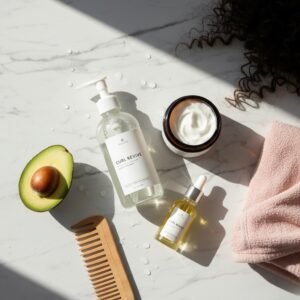
1. The Cleansing Phase
Firstly, your journey to smooth hair starts in the shower. Avoid harsh detergents like Sodium Lauryl Sulfate (SLS), which strip essential moisture.
- Switch to Sulfate-Free: Use “low-poo” or sulfate-free cleansers that clean without stripping.
- Focus on the Scalp: Massage shampoo only into your roots to prevent over-drying the ends.
- Cool Rinse: Always finish your shower with a burst of cool water to help “shut” the hair cuticles.
- Washing Frequency: Limit washing to 2-3 times a week to maintain natural oils.
2. Master the Art of Conditioning
Secondly, you should treat conditioner as your primary styling tool. Understanding your hair porosity is key to how to control frizz.
- Finger Detangling: Never brush curly hair when dry. Use your fingers while the hair is soaked in conditioner.
- Squish to Condish: Pulse water and conditioner into the hair clumps to ensure deep penetration.
- Deep Condition Weekly: Use a mask containing fatty alcohols to repair the lipid barrier.
- Leave-In Magic: Never skip leave-in conditioner; it acts as a secondary barrier against humidity.
Choosing the Right Tools: Frizz Prevention Table
Consequently, reducing mechanical damage is vital. The table below compares common tools used in hair care to help you choose wisely:
| Tool / Method | Effect on Curly Hair | Recommended? |
| Terry Cloth Towel | High friction causes breakage and frizz. | No |
| Microfiber Towel | Absorbs water gently, maintains curl pattern. | Yes |
| Cotton T-shirt | Smooth surface, reduces friction significantly. | Yes |
| Standard Hair Brush | Breaks up curl clumps, creates a “frizz cloud.” | No (when dry) |
| Wide-Tooth Comb | Detangles gently without destroying curls. | Yes (when wet) |
| Silk Pillowcase | Zero friction, maintains moisture overnight. | Yes |
Protecting Your Curls While You Sleep

Similarly, your nighttime routine is vital for maintaining definition. Friction against a cotton pillowcase is a major reason for morning frizz.
- Silk or Satin Pillowcases: These allow the hair to glide smoothly, preventing breakage and moisture loss.
- The Pineapple Technique: Gather your curls loosely at the very top of your head with a silk scrunchie.
- Bonnets: For extra protection, wearing a silk-lined bonnet keeps your curls contained.
- Nighttime Hydration: Apply a light hair oil to the ends before bed to prevent overnight drying.
The Role of Diet and Hydration in Hair Texture
Interestingly, healthy hair starts at the follicle level. Your bloodstream feeds the follicles directly.
- Hydration is Key: Drinking at least 2-3 liters of water daily ensures that your scalp stays hydrated.
- Protein-Rich Foods: Since hair is made of keratin, ensure you eat enough eggs, lean meats, or lentils.
- Essential Fatty Acids: Incorporate salmon and avocados to improve the natural shine of your curls.
- Vitamins for Growth: Ensure adequate intake of Vitamin E and Biotin to strengthen the hair shaft.
FAQ: Your Direct Answers
How to fix frizzy curly hair in 5 minutes?
Use a refresh spray made of water and a bit of leave-in conditioner. Lightly mist your hair and use the “praying hands” method to smooth down the frizz instantly.
What causes frizzy curly hair?
Mainly a lack of moisture causes frizz. Other factors include high humidity, heat damage, harsh chemicals, and friction from cotton towels.
How to reduce frizzy hair?
Prioritize hydration through sulfate-free shampoos and weekly deep conditioning. Also, switch to microfiber towels and silk pillowcases to minimize friction.
How to define curls and stop frizz?
Apply styling products to soaking wet hair using the “scrunching” technique. This encourages curls to clump together and lock in moisture.
What do unhealthy curls look like?
Unhealthy curls appear dull and limp. They tangle easily, have a rough texture, and show visible split ends or a “fuzzy” appearance.
The Bottom Line: Patience and Consistency
In conclusion, learning how to reduce frizz in curly hair is not about a “miracle product.” Instead, it is about adopting a moisture-first lifestyle. By respecting the hair cuticle and following medical advice from experts like the Cleveland Clinic, you can finally embrace your natural texture.
Ultimately, your hair is a unique asset. It requires a bit of extra love, but the result—smooth, bouncy, and healthy curls—is absolutely worth the effort.






2 thoughts on “How to Reduce Frizz in Curly Hair: A Science-Backed Guide”