
Do you hesitate to take off your shoes in public because of yellow, thick, or painful toenails?
You are not alone. Neglecting your feet doesn’t just look bad—it leads to painful infections that can ruin your mobility. But you don’t need expensive salon trips to fix it.
In this guide, we reveal the Best Toenail Care Routine—a medically supported, step-by-step plan backed by podiatrists to banish fungus, prevent ingrown nails, and restore your confidence.
Why Toenail Care Matters
Toenails are not just for show; they protect your toes and help with balance. When neglected, they can quickly become brittle, painful, or infected. The American Academy of Dermatology (AAD) confirms that a simple hygiene routine significantly reduces the risk of serious nail disorders.
Ignoring your feet can lead to common nightmares like:
- Fungal infections: (Onychomycosis) – Yellow, crumbly nails.
- Ingrown toenails: (Onychocryptosis) – Painful nails digging into the skin.
- Brittle nails: (Onychorrhexis) – Splitting and breaking easily.
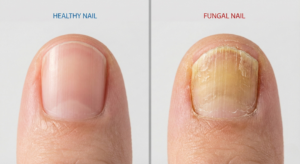
- Thickening: (Onychauxis) – Hard, difficult-to-cut nails.
- Bad Odor: Smelly feet caused by trapped moisture.
Step-by-Step: How to Care for Your Feet and Toenails
Follow this daily routine to keep your feet healthy and infection-free.
1. Wash Feet Thoroughly
Wash your feet daily with warm water and mild soap to remove sweat, dirt, and bacteria, as recommended by the CDC. Good hygiene minimizes bacterial buildup and prevents fungal growth. Inadequate foot care is a common cause of skin problems like cellulitis and ulcers, particularly for those with diabetes or peripheral artery disease.
Key steps:
- Wash with warm water, avoiding hot water to prevent skin dryness.
- Gently clean under the toenails using a soft brush.
- Rinse your feet thoroughly.
- Dry your feet completely, paying special attention to the spaces between your toes. Retained moisture is a primary cause of athlete’s foot and fungal toenail infections.
2. Dry Feet Completely
Toenails are highly susceptible to onychomycosis (fungal growth) as fungus thrives in warm, moist conditions. The American Academy of Dermatology (AAD) emphasizes thoroughly drying feet after washing, as incomplete drying can cause maceration, weakening the skin barrier, and raising the risk of opportunistic infections.
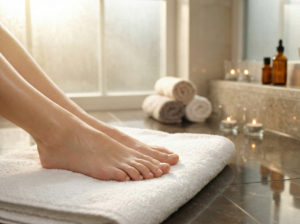
Best practice:
Dry your toes, toenails, and skin folds with a towel. You can use a tissue to help remove any moisture that may be trapped underneath the nails.
3. Wear Breathable, Clean Socks
Choosing the Right Socks for Foot Health
To maintain dry feet and prevent fungal conditions like athlete’s foot, select socks made from breathable materials such as cotton, bamboo, or specialized moisture-wicking fabrics.
Recommendations:
- Materials to Choose: Cotton, bamboo, or athletic moisture-wicking synthetic blends (or wool, especially for those with hyperhidrosis, as per a doctor’s advice).
- Key Habit: Never reuse socks that are damp.
Socks to Avoid:
- Wet socks
- Tight nylon socks
Important Tip:
If you experience significant foot sweating (hyperhidrosis), it is recommended to change your socks at least twice daily.
4. Allow Shoes to Dry Completely
Rotating your footwear is a key recommendation from dermatologists for maintaining foot health. This is because shoes absorb considerable sweat and moisture daily. According to podiatric studies, allowing shoes adequate time to dry is essential for a healthy foot environment, as consistently wearing damp footwear can encourage the proliferation of fungi and bacteria.
Best Practices for Footwear Care and Hygiene
To maximize the life and freshness of your shoes, follow these steps:
- Shoe Rotation: Alternate between 2-3 pairs, avoiding wearing the same pair on consecutive days.
- Air Out: Remove the insoles after each wear to facilitate complete drying of both the shoe and the insole.
- Odor Control: Use shoe-deodorizing sprays or powders as needed to maintain freshness.
Importance of Proper Toenail Care
Maintaining a proper toenail trimming routine is essential for healthy feet, as it helps to prevent common problems like ingrown toenails, splitting, and general nail damage.
1. Trim Toenails Straight Across
Cutting toenails straight across reduces the risk of the corners digging into skin—one of the main causes of ingrown toenails. This trimming technique is recommended by podiatrists and the NHS (National Health Service, UK).
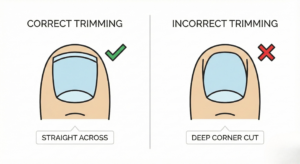
Tips for Trimming Your Nails:
- Always use sharp, clean nail clippers.
- Cut the nail straight across, avoiding a rounded shape.
- Be careful not to trim the nails too short; leave a small amount of the white tip.
2. Soften Nails Before Trimming
Toenails are easier to cut after a warm shower or a 5–10 minute foot soak. This reduces cracking and makes trimming smoother.
3. File Toenails Smoothly
A gentle nail file (preferably a glass or crystal file) smooths uneven edges. Filing prevents snags, reduces micro-splits, and supports even nail growth.
Tips:
- File nails in a single direction.
- Refrain from harsh, saw-like, back-and-forth movements.
- For thin or brittle nails, use a file with a fine grit.
4. Trim Every 4–6 Weeks
Fingernails grow at a faster rate than toenails. Maintaining proper nail care involves finding the right trimming frequency: trimming too rarely can result in thickening or breakage, while excessive trimming can lead to irritation of the surrounding skin.
Moisturizing & Strengthening Toenails
Proper moisture and nourishment are essential for healthy nails.
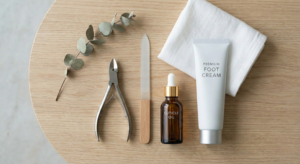
1. Apply Moisturizer Daily
The American Academy of Dermatology (AAD) recommends regular moisturizing to prevent nail cracking and maintain flexibility. Dermatologists, such as Dr. Dana Stern, often emphasize this practice.
Recommended Moisturizer Ingredients:
- Urea (10–20%)
- Glycerin
- Shea butter
- Coconut oil
- Vitamin E
Application Areas:
- Toenails
- Nail folds
- Cuticles
- Surrounding skin
2. Use Cuticle Oil
Cuticle oil supports the nail bed and promotes smoother nail growth. Jojoba oil, almond oil, and vitamin E are commonly recommended for nail nourishment.
3. Avoid Excessive Nail Polish Use
To maintain healthy nails and prevent issues like dehydration or discoloration, toenails should be left unpolished for a period. A break of one to two weeks between polish applications is recommended to protect the health of your nails.
Footwear Habits That Protect Toenails
1. Choose Properly Fitting Shoes
Footwear with a narrow toe box can lead to various issues, such as toenail trauma, bruising, thickening, and ingrown nails.
When choosing shoes, ensure they offer:
- Sufficient space for toes to move freely and wiggle.
- Even distribution of pressure across the foot.
- Ample room for natural nail growth.
For daily wear, breathable athletic shoes and shoes featuring a wide toe box are highly recommended.
2. Avoid Walking Barefoot in Public Areas
Fungal infections are often spread in places like public showers, swimming pools, and locker rooms. A simple and effective way to reduce this risk is by wearing sandals or shower shoes.
3. Managing Heavy Foot Sweat (Hyperhidrosis):
If you experience excessive foot sweating:
- Apply antifungal powder.
- Choose moisture-wicking socks.
- Alternate between different pairs of shoes.
- Consult a dermatologist before using foot antiperspirants.
Prioritizing Hygiene for Pedicures
For individuals who frequently receive pedicures, maintaining rigorous hygiene standards at the salon is essential to prevent infections.
Key Hygiene Practices:
-
Select Reputable, Clean Salons:
- Ensure all metal tools are sterilized.
- Foot baths must use fresh, single-use liners.
- Only clean towels should be used.
- Files and buffers should be disposable.
-
Note: Unsanitary tools are a primary vector for fungal and bacterial toenail infections.
-
Bring Personal Tools:
- Minimize infection and cross-contamination risk by using your own clippers, files, and cuticle pushers.
-
Postpone Pedicures If Skin Is Compromised:
-
Avoid salon visits if you have:
- Cuts or open skin.
- Severe dryness or cracking.
- Recent infections.
- Broken skin provides an easy entry point for bacteria and fungi.
-
—–The document continues with advice on Nutrition for Strong, Healthy Toenails
Key Nutritional Strategies for Strong, Healthy Nails
Nail growth and resilience are significantly influenced by diet. To foster strong, healthy nails, focus on the following nutritional aspects:
1. Boost Keratin Production with Biotin
- Role: Biotin is essential for developing keratin, the primary protein component of nails.
- Food Sources: Incorporate biotin-rich foods like eggs, salmon, almonds, sweet potatoes, and spinach into your diet.
- Note on Supplements: While some research suggests biotin supplements can strengthen brittle nails, always consult a healthcare professional before beginning supplementation.
2. Prioritize Adequate Protein
- Role: Protein provides the structural support necessary for nail health.
- Food Sources: Ensure a good intake of protein from sources such as Greek yogurt, chicken, fish, beans, and lentils.
3. Maintain Optimal Hydration
- Role: Sufficient water intake is crucial to prevent nail dryness and subsequent brittleness.
- Recommendation: Aim to drink 1.5 to 2 liters of water daily to help maintain the moisture content of your nails.
Quick Home Remedies for Minor Issues.
Before seeing a doctor, here are safe ways to manage common problems at home:
- For Ingrown Nails (Early Stage): Soak feet in warm water with Epsom salt for 15 minutes to reduce pain and swelling. Gently massage the skin away from the nail.
- For Yellow/Discolored Nails: Apply Tea Tree Oil or an antifungal cream daily. Keep the nail filed thin to let the medicine penetrate.
- For Dry/Cracked Heels: Apply a Urea-based cream at night and wear cotton socks to lock in moisture while you sleep (Slugging).
When to Seek Professional Medical Help for Toenail Problems
Consult a doctor or podiatrist if you notice any of the following warning signs:
Specific Symptoms Requiring Evaluation:
-
Changes in Nail Appearance:
- Thick, yellow, or crumbly nails, which often suggest a fungal infection (onychomycosis).
- Lifting of the nail from the nail bed, possibly due to fungus, psoriasis, or injury.
- Severe discoloration, such as black or brown streaks. While this can result from trauma, it requires evaluation to rule out a serious condition like melanoma.
-
Pain, Odor, or Discharge:
- Pain concentrated on one side of the toenail commonly indicates an ingrown toenail.
Optimal Toenail Care Routine
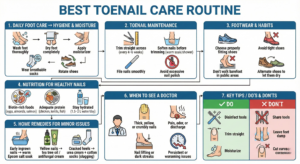
| Frequency | Key Actions for Healthy Toenails |
| Daily | 1. Wash and ensure feet are thoroughly dried. 2. Apply a quality moisturizing product. 3. Choose socks made of breathable materials. 4. Rotate the shoes you wear each day. |
| Weekly | 1. Use a file to gently smooth nail edges. 2. Conduct a close inspection of toenails for any abnormalities. 3. Clean the inside of all footwear. |
| Monthly | 1. Trim toenails straight across to prevent ingrowth. 2. Disinfect all tools used for nail care. 3. Wash or replace the insoles of your shoes. |
| Seasonally | 1. Give nails a break by avoiding the use of nail polish. 2. Replace old or significantly worn-out shoes. 3. Consult a podiatrist for a check-up if any persistent concerns arise. |
Crucial Advice for High-Risk Individuals:
Individuals with diabetes or poor circulation should see a podiatrist immediately upon noticing any toenail issues. For these patients, problems can worsen rapidly and lead to severe complications.
Essential Toenail Care: A Podiatrist’s Quick Guide (Do’s and Don’ts)
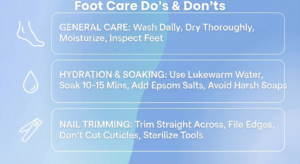
| Action | Recommendation | Rationale/Warning |
| Trimming | DO: Cut toenails straight across. | DON’T: Curve the corners, as this is the primary cause of painful ingrown toenails. |
| Drying | DO: Ensure feet are completely dry, especially between the toes, after washing. | DON’T: Leave feet damp in socks, which promotes fungal infections like Athlete’s foot. |
| Tool Hygiene | DO: Disinfect clippers with rubbing alcohol before and after each use. | DON’T: Share nail tools, as this instantly spreads bacteria and fungus. |
| Footwear | DO: Wear shoes that allow toes to move freely (wiggle room). | DON’T: Use tight shoes, which can cause trauma, black nails, and structural damage. |
| Moisturizing | DO: Apply a urea-based cream to the soles and heels of your feet. | DON’T: Apply lotion between the toes; trapped moisture here can lead to skin breakdown (maceration) and infection. |
Follow this simple checklist for healthy, trouble-free feet.
FAQ’s
- What are the CDC guidelines for nails?
Answer: Keep nails short, clean the underside with soap, sterilize tools before use, and never cut cuticles or bite nails to prevent infection.
Source: Centers for Disease Control and Prevention (CDC)
- What is the best way to take care of your toenails?
Answer: Dr. Miguel Cunha, DPM, recommends a daily routine of washing, thoroughly drying (especially between toes), trimming straight across, and rotating shoes to prevent fungus.
Source: Gotham Footcare
- What is the best nail care routine?
Answer: The AAD advises a “Protect and Hydrate” routine: keep nails clean and dry, cut straight across with sharp clippers, and moisturize cuticles immediately after bathing.
Source: American Academy of Dermatology
- What are the 5 principles of foot care?
Answer: The Mayo Clinic emphasizes these five: 1. Daily Inspection, 2. Proper Hygiene, 3. Moisturizing (avoiding toe gaps), 4. Protection (proper shoes), and 5. Professional Care for corn/calluses.
Source: Mayo Clinic
- What are the steps in toenail care?
Answer: 1. Soak feet to soften nails. 2. Clean under the nail tip. 3. Trim straight across (no curves). 4. File rough edges. 5. Hydrate with cuticle oil.
Source: National Health Service (NHS), UK
- Is vaseline good for toenails?
Answer: Yes. Dr. Shari Lipner, MD, confirms that petroleum jelly is an excellent occlusive moisturizer that seals hydration into the nail plate, treating brittleness effectively.
Source: Weill Cornell Medicine / AAD
- What is the best thing to moisturize your toenails with?
Answer: For thick nails, Urea cream softens keratin. For cuticles, Dr. Adigun, MD, recommends Jojoba oil because its molecular structure closely mimics natural skin oils for deep absorption.
Source: Journal of Drugs in Dermatology
- What is nail slugging?
Answer: Dr. Charles Puza, MD, describes it as layering a penetrating oil (like apricot oil) followed by a thick ointment (like Vaseline) overnight to lock in maximum moisture for damaged nails.
Source: Board-Certified Dermatologist
- What kills toenail fungus?
Answer: While home remedies help, Mayo Clinic experts state that oral prescription antifungals like Terbinafine (Lamisil) are the most effective way to truly kill established nail fungus.
Source: Mayo Clinic
Medical Disclaimer:
The information provided in this article is for educational purposes only and does not substitute professional medical advice. Always consult a podiatrist or dermatologist for severe nail conditions.
Conclusion
Following this simple, medically-informed approach empowers you to maintain the best toenail care routine and tackle common problems before they even start. If you ever notice changes that worry you, persistent pain, or discoloration, don’t hesitate to seek an early check-up from a dermatologist or podiatrist—it’s the smart way to ensure your long-term nail health.





4 thoughts on “Best Toenail Care Routine: Expert Guide for Healthy Feet.”